
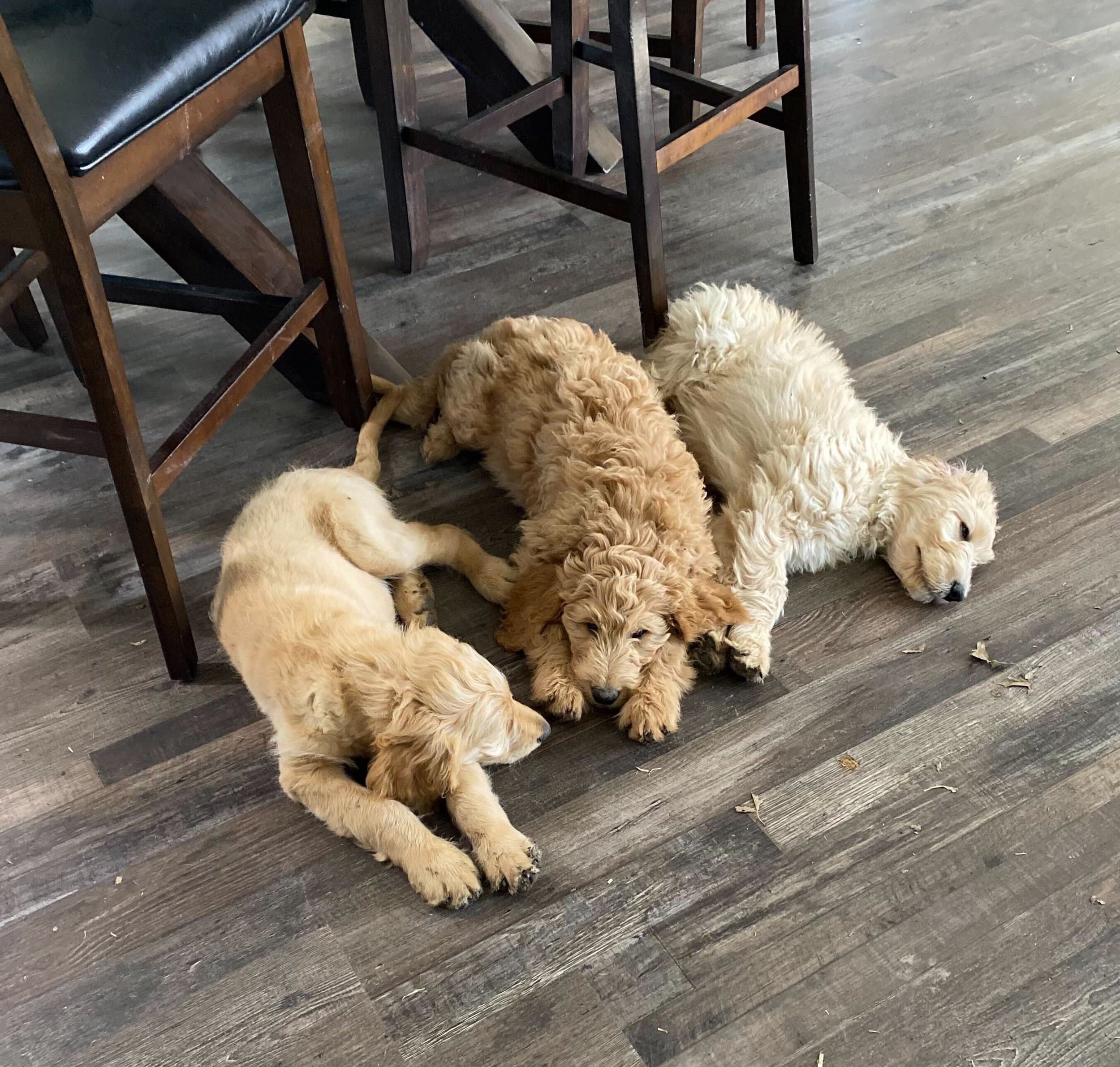
If you own a Goldendoodle in Texas, you will pull a grass burr out of its coat sooner or later. This post covers why doodle coats catch so many burrs and foxtails, how to remove them without a fight, when a foxtail becomes a vet visit, and the grooming habits that prevent most of the trouble.
Why Goldendoodle coats collect so much
A Goldendoodle's wavy or curly coat is the reason so many families choose the breed. It sheds very little, because loose hair stays caught in the curl instead of landing on your couch. The same thing happens with anything sharp and sticky the dog walks through.
The curlier the coat, the more it holds. Families with our F1B Goldendoodles, which carry more poodle in their coats, usually notice it most. A short-haired dog can trot through a field and shake most seeds loose. A doodle carries them home in its leg feathering, paw hair, ears, and belly.
Grass burrs and foxtails are not the same problem
Grass burrs, which most Texans just call stickers, are the hard, spiny seed pods of sandbur grass. They thrive in sandy soil and dry lawns, which is why our families around our Midland Goldendoodle home see them in yards, along sidewalks, and in nearly every vacant lot. They hurt, they tangle into mats, and they make a dog limp when one lodges between the toes. But they mostly stay on the outside.
Foxtails are the seed heads of several wild grasses, common in pastures, ditches, and unmowed edges across North Texas, including the country around our Red Oak program near Dallas. Each one is a narrow spike covered in tiny backward barbs, so it can only move one direction: deeper. A foxtail caught in the coat can work its way into an ear canal, a nostril, the corner of an eye, or the skin between the toes. That is what makes them a health issue rather than a grooming nuisance.
How to get burrs out without hurting your dog
Don't yank. Pulling a burr straight out drags the surrounding hair with it and teaches your puppy that grooming hurts. Instead, hold the hair between the burr and the skin so there is no tug, then tease the burr loose from the outside in with your fingers and a wide-tooth comb. A sprinkle of cornstarch or a little detangling spray helps the hair slide free.
If a burr is buried in a mat, it is kinder to clip the mat out than to work at it for ten minutes. Keep a pair of blunt-tipped grooming scissors by the back door, and always slide a comb between the mat and the skin before you cut so you never nick your dog.
When a foxtail means a trip to the vet
A foxtail you can see sitting on top of the coat is easy to pick off. One that has started going in is not something to dig at yourself. Call your vet if your Goldendoodle suddenly starts sneezing hard, shaking its head, pawing at an ear, squinting one eye, or licking the same spot between its toes.
Those signs often show up right after a walk through tall grass. Vets remove foxtails all the time, and catching one early is usually quick. Waiting can turn it into an infection or an abscess.
Prevention: a trim and a two-minute check
The best defense is less hair where the grass touches. Ask your groomer to keep the feet, the hair between the pads, the lower legs, and the belly trimmed short, and to keep the ear canals clear. Many Texas doodle owners go a little shorter in summer for exactly this reason. Our guide to grooming a Goldendoodle puppy covers how to get a young puppy comfortable with brushing, paw handling, and clippers so these trims stay easy for life.
After outdoor time, run your hands over the paws, between the toes, under the legs, and inside the ear flaps. It takes two minutes once it becomes routine, and it catches most seeds before they become a problem. Keep your own yard mowed, pull sandbur patches before they go to seed, and steer walks away from overgrown ditches and field edges in late summer.
Puppies also do better on short, frequent outings while their bodies are growing, which means less time in the tall grass to begin with. Our post on how much exercise a Goldendoodle needs by age walks through what that looks like as your dog grows.
Frequently Asked Questions
How do you get grass burrs out of a Goldendoodle's coat?
Work grass burrs out slowly with your fingers and a wide-tooth comb, starting at the tip of the hair and loosening the burr away from the skin. A little cornstarch or a detangling spray helps the hair slide free, and a burr buried in a mat is easier to clip out than to pull.
Are foxtails dangerous for Goldendoodles?
Yes, foxtails can be dangerous because their barbed seed heads only move forward and can work into a dog's ears, nose, eyes, paws, or skin. Once a foxtail is inside the body it usually needs a vet to remove it.
What are the signs a Goldendoodle has a foxtail stuck in it?
The most common signs are sudden sneezing, head shaking, pawing at an ear, squinting, limping, or licking one spot between the toes. A small swelling or draining bump on a paw can also mean a foxtail has worked under the skin.
Does trimming a Goldendoodle's coat help with burrs?
Yes, keeping the feet, legs, belly, and ears trimmed shorter is the single best way to cut down on burrs and foxtails. Less hair in the areas that brush the grass means less for seeds to grab and makes daily checks much faster.
When is grass burr and foxtail season in Texas?
Grass burrs and foxtails are worst from late spring through fall, when the grasses go to seed and dry out. In much of Texas that stretches across most of the warm season, so a quick check after outdoor time is worth making a year-round habit.
Questions about coat care before your puppy comes home? Send our family a message.
We're Here After Pickup, Too
Every Purkey Puppies family gets our help long after their puppy goes home, from coat care to the first stubborn sticker. If you have questions about living with a Goldendoodle in Texas, call or text 432-770-6013. We're happy to talk it through.
Ready to Reserve Your Puppy?
Join the waitlist for an upcoming litter from our Midland or Red Oak, TX program. $200 reserves your spot.