If someone in your house has dog allergies, you've probably seen Goldendoodles called hypoallergenic. The honest answer is that no dog is truly allergy-free, though many allergy-sensitive families do well with a low-shedding Goldendoodle. This post covers what causes dog allergies, what a Goldendoodle's coat can and can't do, and how to find out how your family reacts before you reserve.
What “hypoallergenic” actually means
Hypoallergenic means less likely to cause a reaction. It doesn't mean free of allergens. Dog allergies aren't caused by hair. They come from proteins in a dog's dander, saliva, and urine, and every dog makes them, whatever its coat looks like.
Studies that measured allergens in homes haven't found reliably lower levels with breeds marketed as hypoallergenic, and the amount varies widely from one dog to the next. We can't promise a puppy won't trigger your allergies, and neither can any other breeder.
Why many allergy families still do well with a Goldendoodle
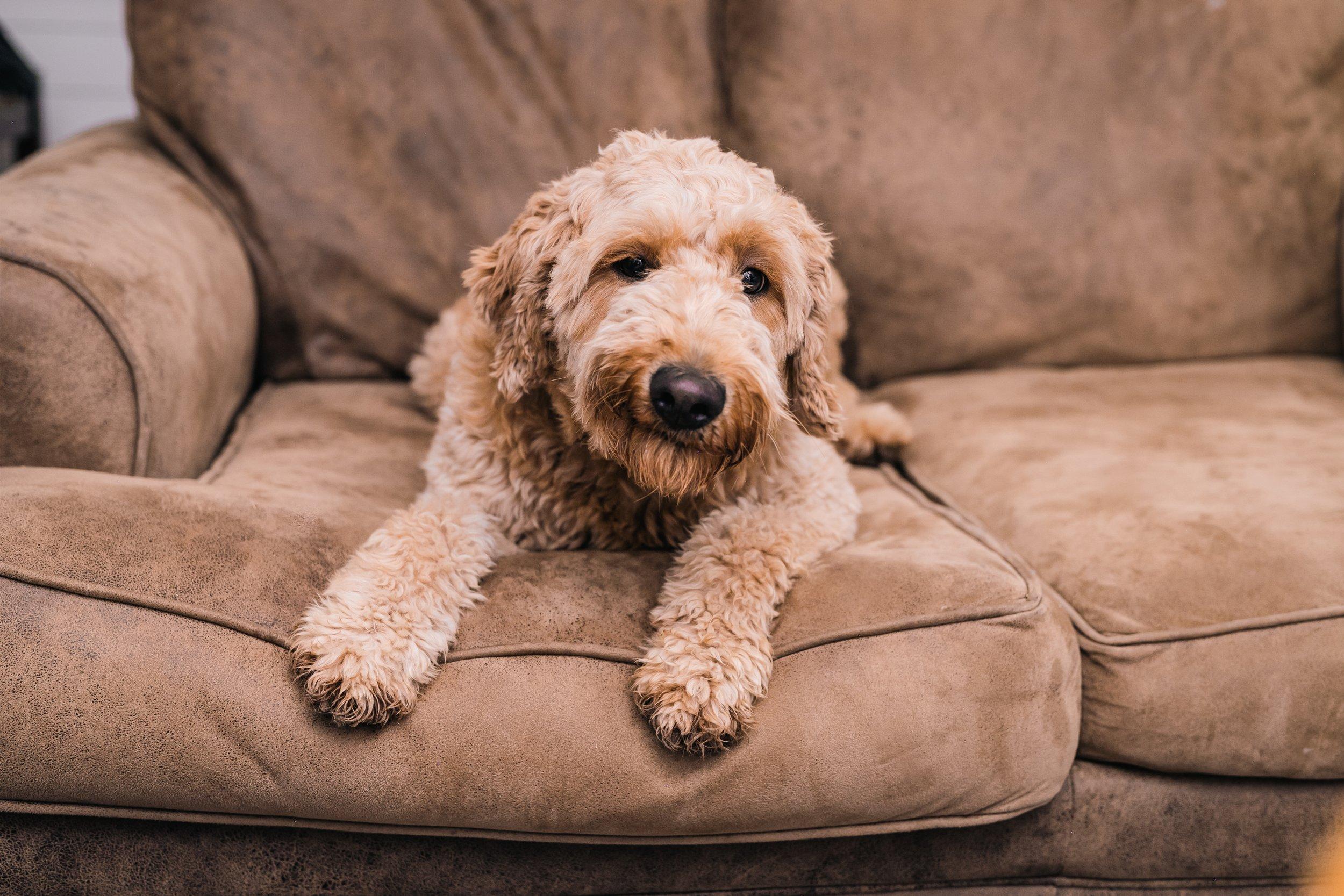
Shedding is how allergens travel. Hair that falls out carries dander onto your couch, your carpet, and your clothes. A curly, Poodle-influenced coat holds loose hair until it's brushed out, so less of it ends up around your home. That doesn't remove the allergen, but for many people with mild sensitivities it makes living with a dog much easier.
Generation matters here. A first-generation cross can lean toward either parent, so its coat is harder to predict. That's why we breed only F1B Goldendoodles, which are 75% Poodle and have the most consistent low-shedding coat. Our guides to Goldendoodle generations and how much Goldendoodles shed go deeper on both. Size doesn't change the coat, so a Mini Goldendoodle and a Standard Goldendoodle are on equal footing.
How to test your reaction before you reserve
The only reliable test is time around real dogs.
- See an allergist first. Testing can confirm that dogs are the problem. Cedar, ragweed, and dust are common in Texas and can feel a lot like a pet allergy. Some people also react mainly to Can f 5, a protein made by male dogs, which is worth knowing when you're choosing between a male and a female.
- Meet adult dogs, not only puppies. A puppy's soft coat isn't its adult coat, and that change happens between about 6 and 12 months. Time with our parent dogs tells you more than a few minutes with a litter.
- Stay a while, then wait. Sit on the floor, pet the dogs, and let them lick your hands. Reactions can take hours to show up, so notice how you feel that evening and the next morning.
Visits are welcome by appointment at either our Midland program or our Dallas-area program in Red Oak.
Living with allergies and a Goldendoodle
A few habits can keep symptoms down.
- Stay on a grooming schedule. Plan on brushing several times a week and a professional groom every six to eight weeks. Our puppy grooming guide shows you how to start. Have someone without allergies do the brushing if you can.
- Keep the bedroom dog-free. It gives the person with allergies one room with far less allergen.
- Clean the air and floors. Run a HEPA air purifier where the family spends the most time, and vacuum often.
- Wipe down after walks. A curly coat picks up pollen outside, so a quick wipe helps during cedar and ragweed season.
Our honest advice
If someone in your home has severe allergies or asthma, talk to their doctor before you bring home any dog. Having to give up a puppy is hard on everyone. For milder allergies, an F1B Goldendoodle is a reasonable choice, as long as you've tested your reaction first.
The Purkeys, Stinnetts, and Gentrys would rather have that conversation early, before you pay the $200 reservation fee. Tell us about allergies up front, and we'll help you plan a visit.
Frequently Asked Questions
Are Goldendoodles hypoallergenic?
No, Goldendoodles are not truly hypoallergenic, because every dog produces the proteins that cause allergies. Many allergy-sensitive people still do well with them, since a low-shedding coat spreads less hair and dander around the home.
Are Mini Goldendoodles better for allergies than Standards?
No, neither size is automatically better for allergies, because Mini and Standard Goldendoodles of the same generation have the same kind of coat. Differences between individual dogs matter more than size.
Can you be allergic to one Goldendoodle and not another?
Yes, you can react to one Goldendoodle and not another, because allergen levels vary from dog to dog. That is why time with the actual dogs tells you more than any breed label.
Does a Goldendoodle puppy tell you how you'll react to the adult dog?
No, a puppy is not a reliable guide to how you will react to the adult dog. A Goldendoodle's coat changes between about 6 and 12 months, so meeting adult dogs gives you a better read.
How do you reduce dog allergies at home?
The most effective steps are keeping the dog out of the bedroom, running a HEPA air purifier, and staying on a regular grooming schedule. Washing the dog's bedding weekly and washing your hands after playtime also help.
Can I visit Purkey Puppies to see if I react to the dogs?
Yes, you can visit either of our Texas locations by appointment before you reserve. Bring the family member with the strongest allergies so you can see how they respond.
Talk to Us About Allergies
Call or text Jenna at 432-770-6013, or send us a message. We're happy to set up a visit, even if you're not ready to reserve yet.
Ready to Reserve Your Puppy?
Join the waitlist for an upcoming litter from our Midland or Red Oak, TX program. $200 reserves your spot.